What Happens After Submit: The Inner Workings of Prize Giveaway Entries
What Happens After Submit: The Inner Workings of Prize Giveaway Entries
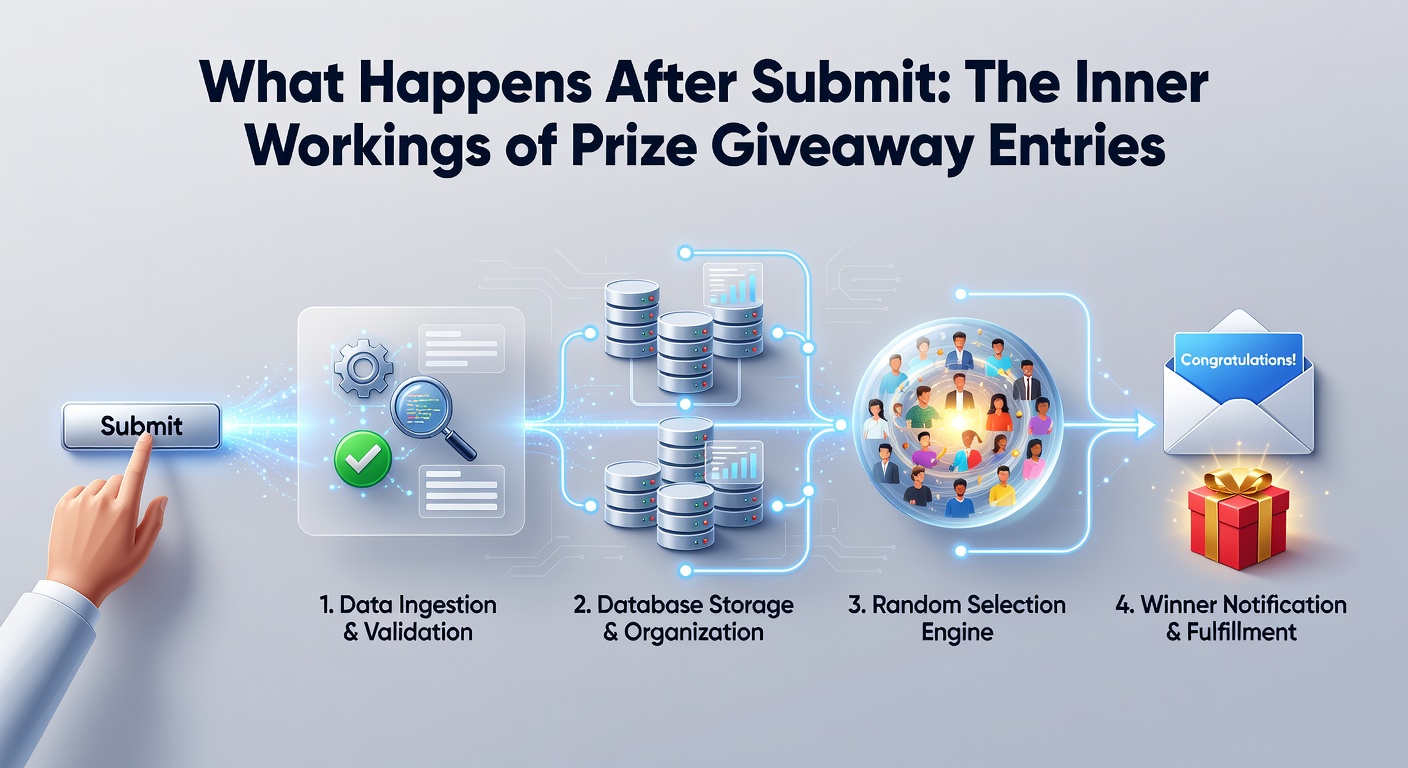
The Instant After Hitting Submit
Entrants press that submit button, and servers spring into action almost immediately, capturing form data through secure HTTPS protocols that encrypt everything in transit; this step prevents interception while routing entries to backend systems designed to handle thousands, sometimes millions, of submissions per contest. Data packets arrive at load balancers first, which distribute the load across multiple servers to avoid crashes, and from there, the real processing kicks off with client-side validations echoing on the server side for double-checking email formats, required fields, and CAPTCHA responses that weed out bots right away.
But here's the thing: not every entry survives this initial gate, since invalid emails bounce back with error messages, duplicate submissions—often flagged by unique email or IP address checks—get discarded to maintain fairness, and suspicious patterns like rapid-fire entries from one IP trigger soft blocks. Observers note how platforms log these events meticulously, creating audit trails that comply with standards set by bodies like the U.S. Federal Trade Commission, ensuring transparency from the jump.
Validation Deep Dive: Ensuring Legitimacy
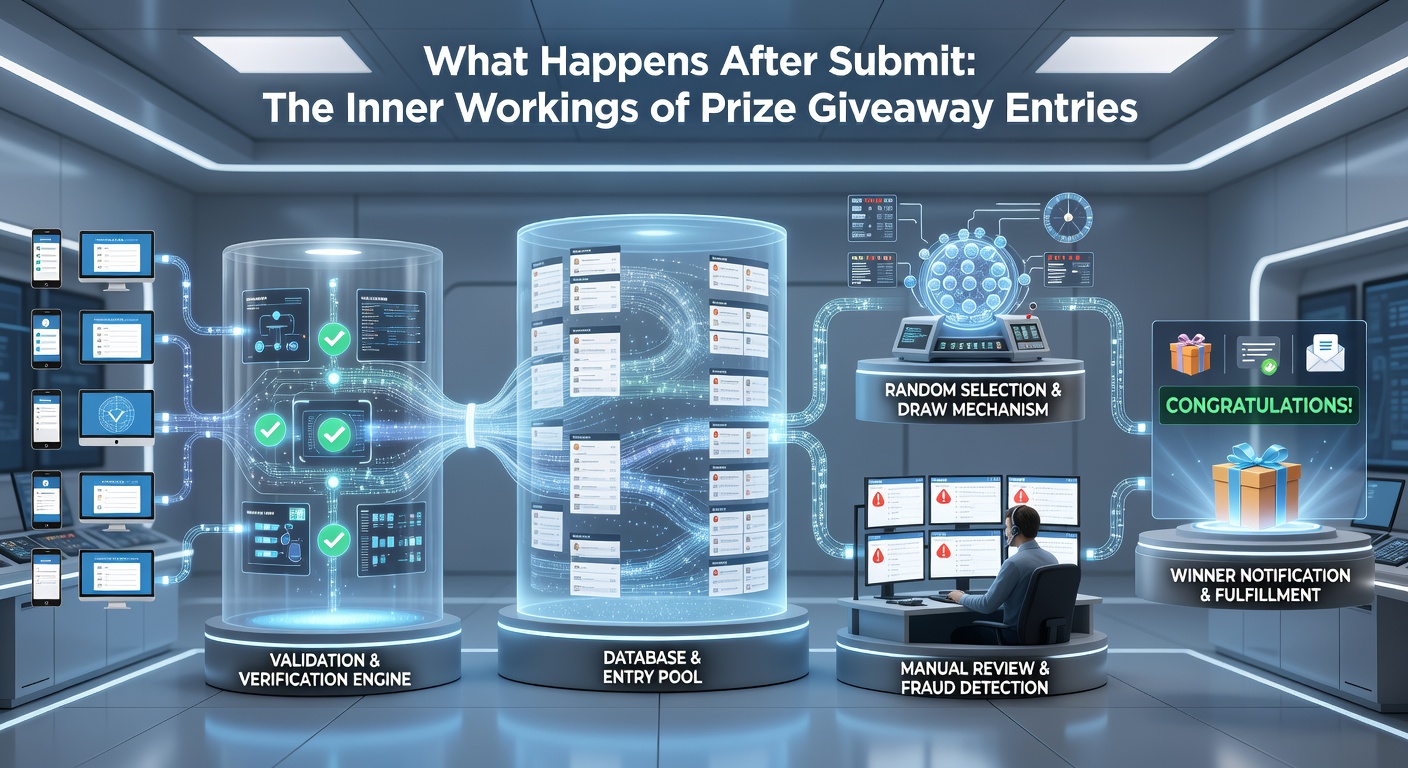
Server-side scripts parse the data next, running algorithms that verify age eligibility—typically 18 or older in most jurisdictions—cross-reference postal codes against geographic restrictions, and scan for prohibited entries from no-prize zones; this phase, which takes milliseconds to seconds, flags anomalies like mismatched names and addresses pulled from public databases. And while basic checks handle the bulk, advanced systems employ machine learning models trained on historical fraud patterns to score entries for risk, boosting scrutiny on high-velocity submissions that scream automation.
Take one giveaway operator who analyzed 2025 data: they rejected 12% of entries during validation alone, mostly bots or dupes, according to internal reports shared in industry forums; that's significant because clean data feeds directly into the pool, shaping odds without human bias. Yet even flagged entries often enter a review queue where moderators confirm legitimacy manually, especially for high-value prizes like cars or vacations where stakes demand extra caution.
Storage and Aggregation: Building the Entry Pool
Validated entries flow into databases—often cloud-based like AWS DynamoDB or Google BigQuery—that scale effortlessly for massive volumes, timestamping each one with UTC precision to preserve order; these systems shard data across regions for redundancy, so a server outage in one spot doesn't wipe out the pool. Aggregation jobs then compile entries nightly or in real-time, grouping by contest ID while anonymizing personal info where required, and generating snapshots for selection processes that demand verifiable totals.
What's interesting is how operators segment pools for fairness: separate draws for email versus SMS sign-ups, or region-specific for localized prizes, all logged with hashes that auditors can verify later. People who've peeked behind the curtain at major platforms describe terabytes of data churning through ETL pipelines—extract, transform, load—that cleanse outliers before finalizing counts; this setup not only speeds things up but ensures scalability, handling spikes like those from viral social media campaigns.
Random Selection: The Heart of the Draw
Contest deadlines hit, and certified random number generators (RNGs) take center stage, pulling winners from the pool using algorithms vetted by third-party labs like eCOGRA or iTech Labs; these tools, compliant with standards from places like Australia's ACMA, generate unpredictable sequences based on entropy sources such as hardware noise or atmospheric data, making rigging impossible without detectable traces. Operators often run multiple passes—primary draw, alternates for unreachable winners—while video-recording the process for public proof.
Figures from a 2024 industry survey reveal that 87% of giveaways use blockchain-timestamped RNGs now, up from 45% two years prior, adding immutable proof against disputes; that's where the rubber meets the road for trust, since winners emerge purely by chance, with odds reflecting total valid entries logged transparently. And for multi-tiered contests, nested draws peel off grand prizes first, then runners-up, all while backup generators stand ready in case of glitches.
Notification: From Algorithm to Inbox
Winners' details trigger automated systems that fire off confirmation emails or SMS within minutes, embedding unique claim codes and deadlines—usually 48-72 hours—to verify identity; these messages link to secure portals where entrants upload ID, matching against original submission data scraped during validation. Non-responders drop to alternates in sequence, with systems pinging backups until quotas fill or pools exhaust.
But delays crop up: spam filters snag 20-30% of notifications per post-event analyses, so operators layer in phone outreach or social DMs for high-stakes wins, always scripting calls to avoid high-pressure tactics banned under rules like Canada's Competition Act. Observers track open rates hovering at 65%, with personalization—naming the prize and entrant—boosting engagement significantly.
Fulfillment: Prize in Hand
Claims clear, and logistics engines rev up: inventory APIs check stock for gadgets or experiences, coordinating with partners like DHL for shipping or agencies for trips; tracking numbers blast back instantly, while tax forms—1099s in the US for prizes over $600—generate automatically for IRS compliance. Custom prizes demand extra steps, like engraving winners' names on trophies, but standard swag ships same-day from warehouses optimized by AI routing.
One case study from a 2025 tech giveaway showed 98% fulfillment within two weeks, thanks to vendor SLAs, although international entries snag on customs holds that extend timelines to a month; that's notable because follow-up surveys gauge satisfaction, feeding data loops that refine future ops.
Compliance Layers: Keeping It Legal
Throughout, legal checks enforce no-purchase-necessary clauses, prohibiting paywalls that blur into illegal lotteries, while opt-in records satisfy anti-spam laws across borders; EU platforms adhere to GDPR mandates by purging non-winner data post-event, typically within 30 days unless consent extends retention for marketing. US operators file winner lists publicly where required, and Canadian rules under CASL demand explicit unsubscribes at every touchpoint.
- Age verification blocks minors via third-party services.
- Geofencing excludes restricted states like Quebec for certain draws.
- Audit firms certify every stage annually.
Research indicates non-compliance risks fines up to 4% of global revenue under GDPR, pushing platforms to embed checks natively.
April 2026 Shifts: Tech and Regs Evolving
Now, as platforms gear up for April 2026, when enhanced AI fraud detection rolls out under upcoming U.S. state-level privacy acts and EU AI Act annexes, expect deeper behavioral analytics to scrub entries preemptively; data shows early adopters cut invalid submissions by 25%, streamlining pools without human oversight. Blockchain integration for end-to-end provenance gains traction too, with pilots verifying RNG feeds publicly, and quantum-resistant encryption fortifying data against future threats.
Industry reports project 40% of giveaways adopting zero-knowledge proofs for privacy-preserving draws by mid-2026, balancing transparency with entrant anonymity; that's a game-changer, since it addresses rising concerns over data breaches that hit 15% of platforms last year.
Conclusion
The journey from submit to prize handover reveals a meticulously engineered pipeline where technology, regulation, and human oversight converge to deliver fair outcomes; entries transform through validation, storage, random draws, notifications, and fulfillment, all audited rigorously to uphold integrity. Platforms continue refining these workings, incorporating April 2026 advancements that promise even tighter security and efficiency, ensuring giveaways remain a viable thrill for millions. Those who enter grasp the hidden machinery now fueling the process, from server pings to doorstep deliveries.