Navigating Regulatory Hurdles in Cross-State Prize Redistributions from Multi-Partner Campaigns
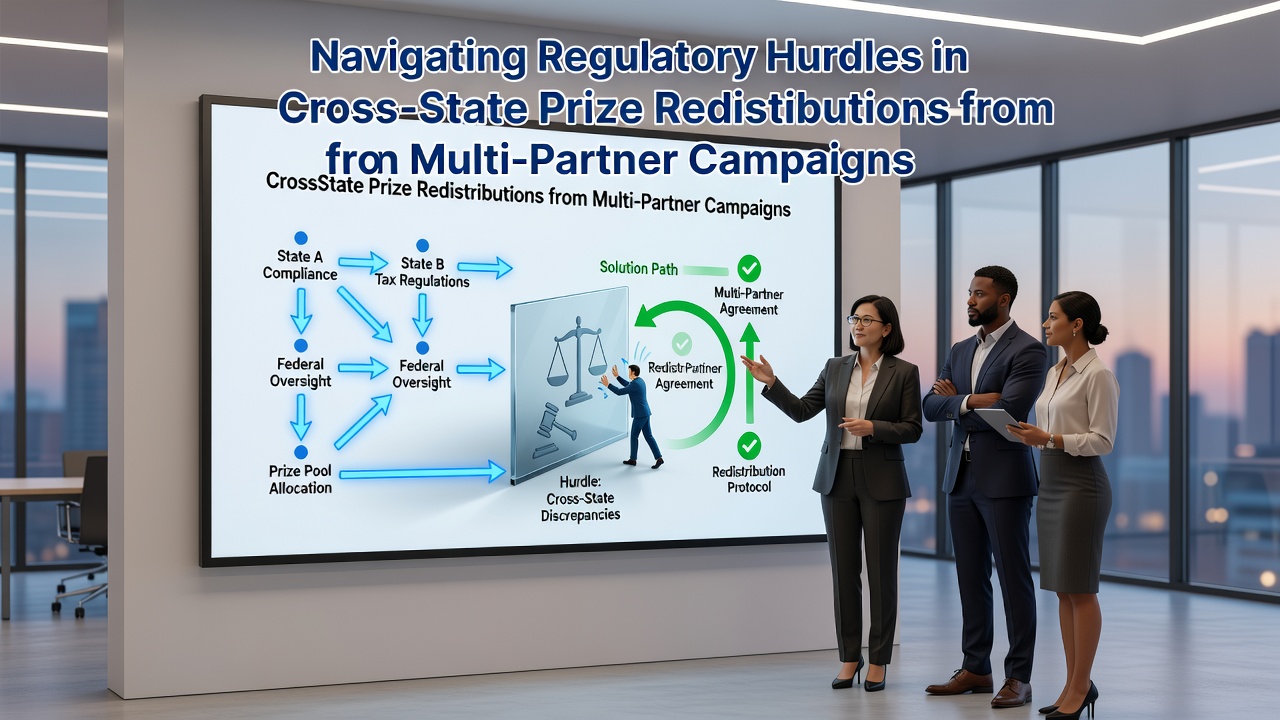 Multi-partner campaigns often pull together brands from different jurisdictions to offer pooled prizes, yet each state maintains its own set of rules on eligibility, disclosure, and winner selection. Observers note that when a national brand partners with regional retailers the resulting prize pool must satisfy every participating state's statutes simultaneously, which creates overlapping filing deadlines and varying bond requirements. Data from industry reports shows that failure to align these requirements can delay distributions for weeks or trigger enforcement actions from multiple attorneys general offices at once.
State Variations in Eligibility and Bonding Rules
Each state treats sweepstakes and contests as either games of chance or skill-based promotions, and the distinction matters because registration thresholds differ sharply. New York and Florida demand registration once the prize value exceeds five thousand dollars, whereas California requires filings starting at a lower threshold for certain types of promotions. Experts at regulatory compliance firms explain that multi-partner campaigns must calculate the aggregate prize value across all partners rather than per-brand contributions, since regulators examine the total pool when determining whether bonding or registration applies.
Those who coordinate these campaigns frequently discover that bonding amounts can reach several hundred thousand dollars in high-value states, and the bond must remain in force until all winners receive their prizes. This requirement becomes especially complex when one partner operates only in states without bonding mandates while another maintains nationwide reach, forcing the entire group to satisfy the strictest standard. Research indicates that staggered effective dates for rule changes add another layer of difficulty, with several states updating their consumer protection statutes on staggered schedules throughout 2025 and into 2026.
Tax Reporting Across Jurisdictions
Federal tax rules require sponsors to issue Form 1099-MISC for prizes valued at six hundred dollars or more, yet state income tax withholding obligations vary independently. Some states mandate withholding on prizes above a certain amount while others treat the prize as ordinary income reported solely by the recipient. Campaign administrators therefore maintain separate tracking systems for each jurisdiction to avoid under-withholding penalties that can reach twenty-five percent of the prize value in certain states.
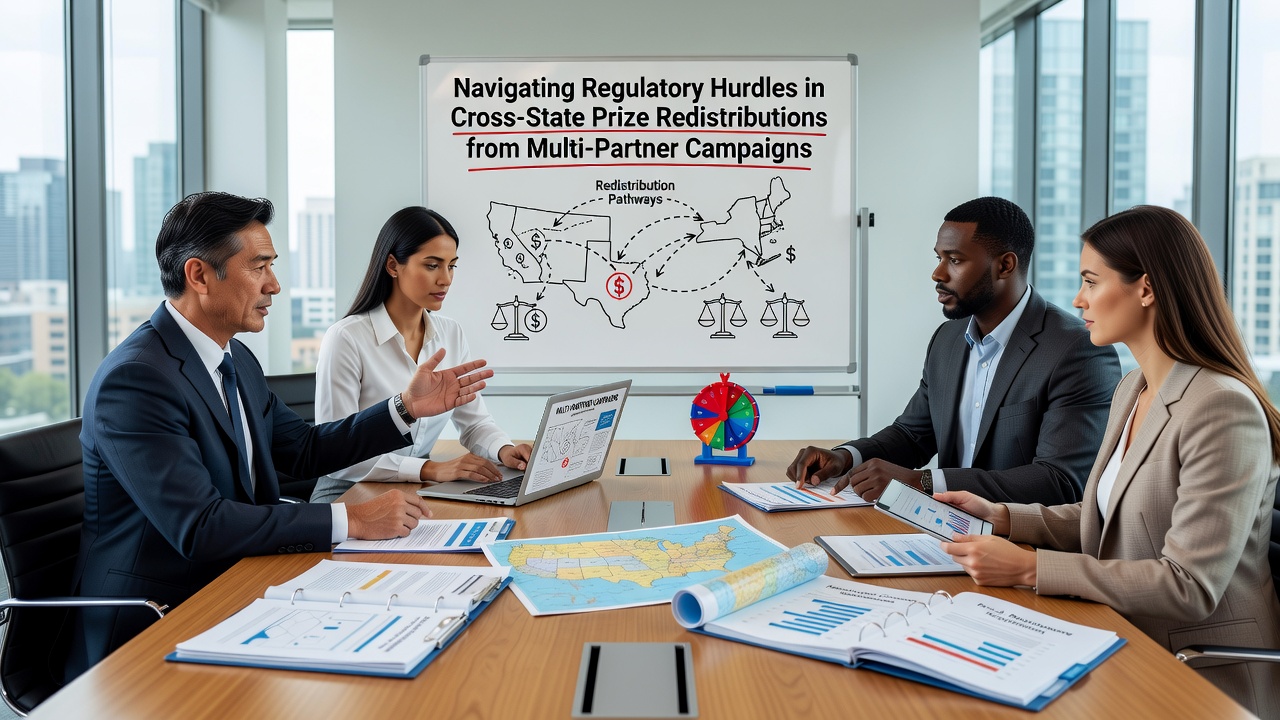
One study of promotional compliance patterns revealed that campaigns involving partners in both high-tax and no-income-tax states often route prize payments through a central clearing entity to simplify reporting, although this structure itself requires additional review by tax authorities. The approach reduces administrative duplication but demands precise allocation records so each state receives accurate information about its residents' winnings. According to the Federal Trade Commission, clear disclosure of tax responsibilities in official rules helps prevent later disputes between winners and sponsors.
Coordinating Winner Verification and Claim Periods
Verification protocols must accommodate differing state standards for proof of identity and residency. Some jurisdictions accept digital scans of driver's licenses while others insist on notarized affidavits within tight timeframes. When partners operate across time zones the claim window can close before winners in western states receive notification, prompting campaigns to extend deadlines uniformly to the longest required period. Observers tracking these patterns report that automated notification systems now incorporate state-specific triggers to ensure compliance without extending every timeline unnecessarily.
June 2026 brings additional attention to these processes because several states plan to implement updated digital signature acceptance rules that affect affidavit submissions. Campaign operators have begun testing platforms that generate jurisdiction-specific documents automatically, reducing the risk that a winner's paperwork will be rejected in one state while accepted in another. The Competition Bureau Canada has published parallel guidance on cross-border promotions that some U.S. operators reference when Canadian partners participate, illustrating how regulatory alignment efforts extend beyond single-country borders.
Practical Compliance Frameworks
Successful multi-partner teams typically appoint a single compliance lead who maintains a matrix mapping each partner's operational footprint against applicable statutes. This matrix tracks registration numbers, bond expiration dates, and tax withholding rates so that prize redistribution occurs only after all checkpoints clear. Regular audits of the matrix help surface conflicts early, such as when one partner's loyalty program rules inadvertently conflict with another state's disclosure requirements.
Training sessions for partner marketing teams focus on recognizing when a seemingly minor rule change in one state triggers reevaluation of the entire campaign structure. Data collected from past distributions shows that proactive updates reduce the incidence of withheld prizes and subsequent legal correspondence. Those coordinating these efforts emphasize documentation at every stage because regulators frequently request records spanning multiple years when investigating complaints.
Conclusion
Cross-state prize redistributions in multi-partner campaigns require careful alignment of registration, bonding, tax, and verification requirements that differ by jurisdiction. Organizations that maintain detailed compliance matrices and update them ahead of scheduled regulatory shifts position themselves to complete distributions without interruption. Continued monitoring of state legislative calendars remains essential as rules evolve, particularly with changes slated for mid-2026 in multiple regions.