Decoding Browser Fingerprinting Techniques and Their Filtering Effects on Qualification Systems Within Online Promotional Reward Networks
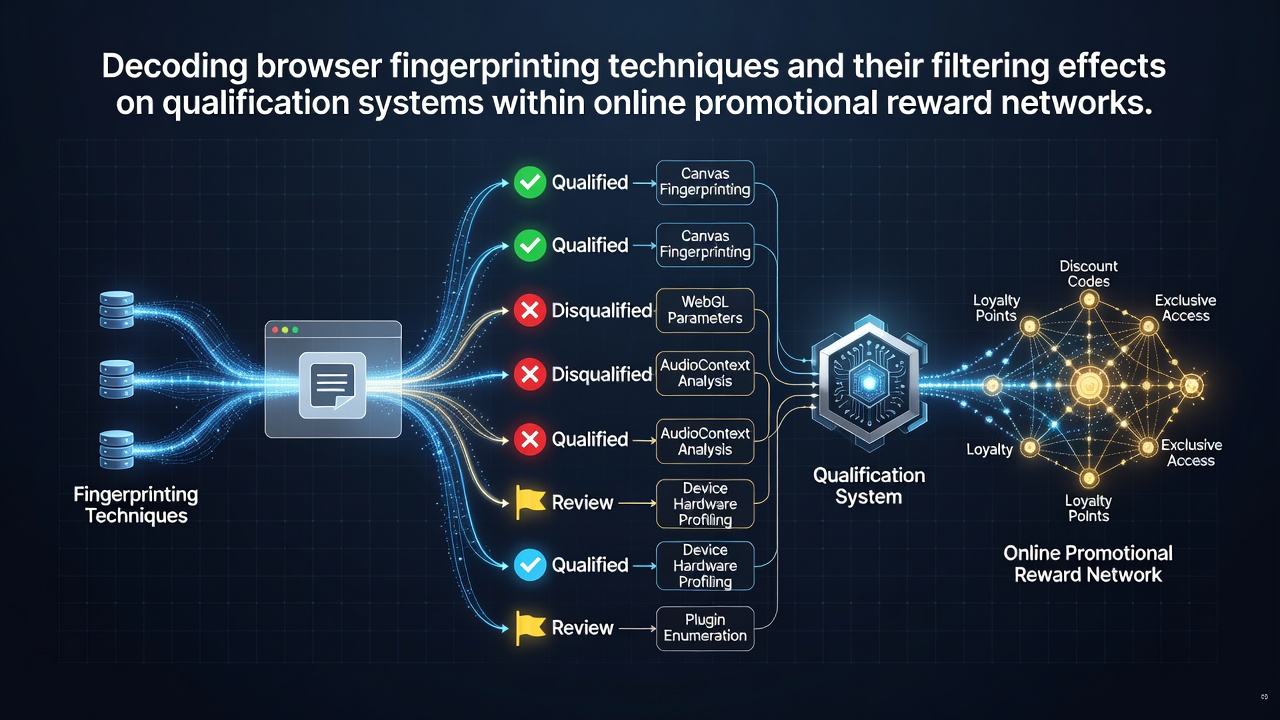 Browser fingerprinting operates as a method for identifying unique devices through the collection of configuration details that browsers expose during normal web interactions, and this process plays a direct role in qualification checks inside promotional reward networks where operators seek to limit duplicate submissions. Data collection occurs through JavaScript queries that gather attributes such as screen resolution, installed fonts, canvas rendering outputs, and WebGL parameters, while the resulting hash values allow systems to match incoming entries against stored profiles without relying on cookies or IP addresses alone. Techniques vary in precision and detectability. Canvas fingerprinting draws text or shapes onto an invisible element and reads the pixel data that emerges from slight differences in graphics drivers and anti-aliasing settings across devices. Font enumeration lists available typefaces by measuring rendered widths, and audio context fingerprinting processes oscillator outputs through the Web Audio API to capture hardware-specific timing variations. Researchers at institutions across North America and Europe have documented how these signals combine to produce identifiers stable enough for repeated detection over weeks or months. Qualification systems in reward networks apply these fingerprints at the point of entry submission to enforce rules that restrict multiple participations from the same user. When a fingerprint matches an existing record, the platform can flag the attempt as ineligible before it reaches the random draw stage, and this filtering occurs in real time through API calls that compare new hashes against databases updated daily. Studies conducted by privacy research groups in Australia and Canada show that networks handling daily contests integrate such checks to maintain compliance with entry limits stated in official rules.
Core Fingerprinting Methods and Data Points
Operators collect dozens of attributes that together form a composite signature, and common vectors include HTTP headers, TLS configurations, and plugin lists that survive incognito mode attempts. WebRTC leak tests expose local IP details and media device enumerations, while battery status APIs and sensor readings from accelerometers add layers that mobile entries introduce. Figures from industry reports compiled in 2025 indicate that networks processing millions of submissions monthly rely on these combined signals to reduce duplicate qualification rates by measurable margins.
Canvas and WebGL outputs remain among the most stable components because graphics hardware creates consistent noise patterns, yet users who rotate devices or apply custom font stacks can shift their profiles enough to bypass simple matching. Networks therefore layer additional signals such as timezone offsets and language preferences, creating thresholds that trigger further verification when partial matches appear. As of July 2026, several major platforms updated their detection thresholds after observing seasonal spikes in entry volume from shared public networks.
Filtering Mechanisms in Qualification Pipelines
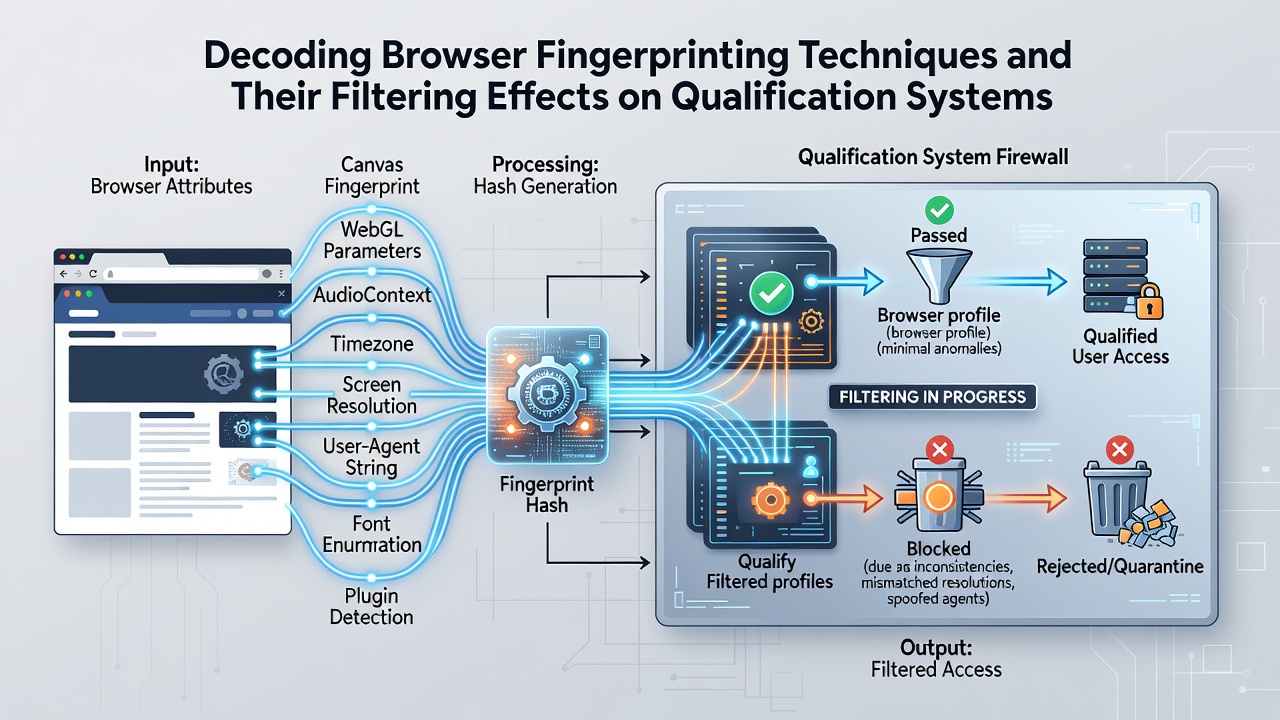
Once a fingerprint enters the system, algorithms compare it against historical records using similarity scoring rather than exact equality, and scores above defined cutoffs route the submission into review queues or automatic rejection paths. This approach accommodates minor variations from software updates while still blocking obvious reuse attempts, and it integrates with other signals such as behavioral patterns captured during form completion.
Promotional networks that partner across multiple brands apply these filters uniformly to satisfy sponsor requirements for fair distribution, and data lineage logs record each decision point so that audit trails exist for regulatory review. Government agencies in the European Union and the United States have referenced similar tracking practices when issuing guidance on data minimization in consumer-facing promotions, encouraging operators to document the necessity of each collected attribute.
Effects on Entry Patterns and System Integrity
Participants who encounter fingerprint-based blocks often shift to alternative devices or browsers, which in turn generates new data points that networks incorporate into evolving detection models. Longitudinal observations from research teams in Asia and South America reveal that entry volumes from VPN endpoints decrease after fingerprint layers activate, because the combination of network latency metadata and device signatures creates stronger correlation than IP checks alone. Networks therefore maintain higher integrity in prize allocation without relying solely on geographic restrictions.
Verification protocols now cross-reference fingerprint results with email and account linkage patterns, creating multi-factor qualification gates that operate before any prize claim process begins. Trade associations representing digital marketing firms have published guidelines that recommend periodic audits of fingerprint accuracy rates to avoid over-filtering legitimate users who share household devices.
Regulatory Context and Technical Evolution
Privacy frameworks in multiple jurisdictions require disclosure of tracking methods used in promotional platforms, and operators respond by publishing summaries of data categories collected during entry flows. Academic papers from universities in the United Kingdom and Germany have analyzed how fingerprint stability changes when users enable tracking protection features in mainstream browsers, showing measurable drops in match rates that prompt networks to adopt supplementary signals such as request timing distributions.
July 2026 brought incremental updates to browser standards that limit certain enumeration APIs, and networks adapted by weighting remaining attributes more heavily while testing new vectors such as CSS font rendering differences. These adjustments keep qualification systems aligned with both technical realities and legal expectations across operating regions.
Conclusion
Browser fingerprinting supplies promotional reward networks with durable identifiers that strengthen qualification enforcement without persistent storage of traditional cookies, and the layered filtering it enables directly shapes which submissions advance to prize consideration stages. Continued refinement of detection methods occurs alongside evolving browser capabilities, while external oversight from regulatory bodies maintains focus on proportionality and transparency in data handling practices.