Brand Tie-Ins Decoded: Free Entries, Cash Drops, and Contest Rule Twists from Promo Partners
Brand Tie-Ins Decoded: Free Entries, Cash Drops, and Contest Rule Twists from Promo Partners
Unpacking Brand Tie-Ins in the Promo Landscape
Brand tie-ins have reshaped how companies launch promotions, with partnerships between consumer goods giants and specialized promo agencies creating sweepstakes that blend marketing muscle and regulatory savvy; these collaborations often deliver free entry options alongside high-stakes prizes like cash drops, while promo partners introduce rule twists to maximize participation without tripping legal wires. Observers note that such tie-ins surged in popularity post-pandemic, as brands sought cost-effective ways to recapture consumer attention amid shifting shopping habits. Data from industry reports indicates tie-ins accounted for nearly 40% of major sweepstakes in 2024, a trend showing no signs of slowing.
Promo partners—firms like Merkle or Don Jagoda Associates—handle the heavy lifting, from rule crafting to prize fulfillment, ensuring brands stay compliant while pushing creative boundaries. Take one campaign where a snack food leader teamed with a beverage powerhouse; participants snagged free entries via app scans, unlocking instant cash drops up to $1,000, all orchestrated by the partner to dodge no-purchase-necessary pitfalls. It's noteworthy how these setups turn everyday purchases into promo gateways, yet always include mail-in alternatives for fairness.
And while free entries level the playing field, cash drops add urgency—random digital notifications blasting winners with immediate payouts—transforming passive scrollers into active hunters. Rule twists, meanwhile, keep things fresh; promo partners tweak eligibility or entry caps based on real-time data, adapting to regional laws without alienating entrants.
Free Entries: The No-Cost Gateway to Big Wins
Free entries stand as the cornerstone of compliant promotions, mandated by laws in regions like the US where the Federal Trade Commission requires alternative methods of entry (AMOE) to avoid lottery classifications; entrants mail postcards or submit online forms, no purchase required, opening doors for budget-conscious players. Promo partners streamline this, often integrating AMOE into brand apps or websites, where one scan or click grants multiple entries daily.
But here's the thing: these free paths don't dilute prize pools; studies from marketing analysts reveal free entrants boost overall engagement by 25%, as non-buyers share campaigns virally, amplifying reach. Consider a recent tie-in between a telecom firm and a fast-food chain—free entries via text or social shoutouts piled up alongside purchase-based ones, with promo rules capping dailies at five to prevent spam while encouraging habit-forming checks.
People who've tracked these often discover geographic nuances; in Canada, the Competition Bureau emphasizes clear AMOE disclosures, prompting partners to layer multilingual options and deadline reminders. Turns out, savvy entrants exploit these, stacking free entries across tie-in networks for compounded odds.
Yet complexity arises in multi-brand setups, where one partner's free entry funnels into another's prize draw; experts observe seamless tech integrations make this frictionless, although fine print demands vigilance on void-where-prohibited clauses.
Cash Drops: Instant Thrills in Brand Collaborations
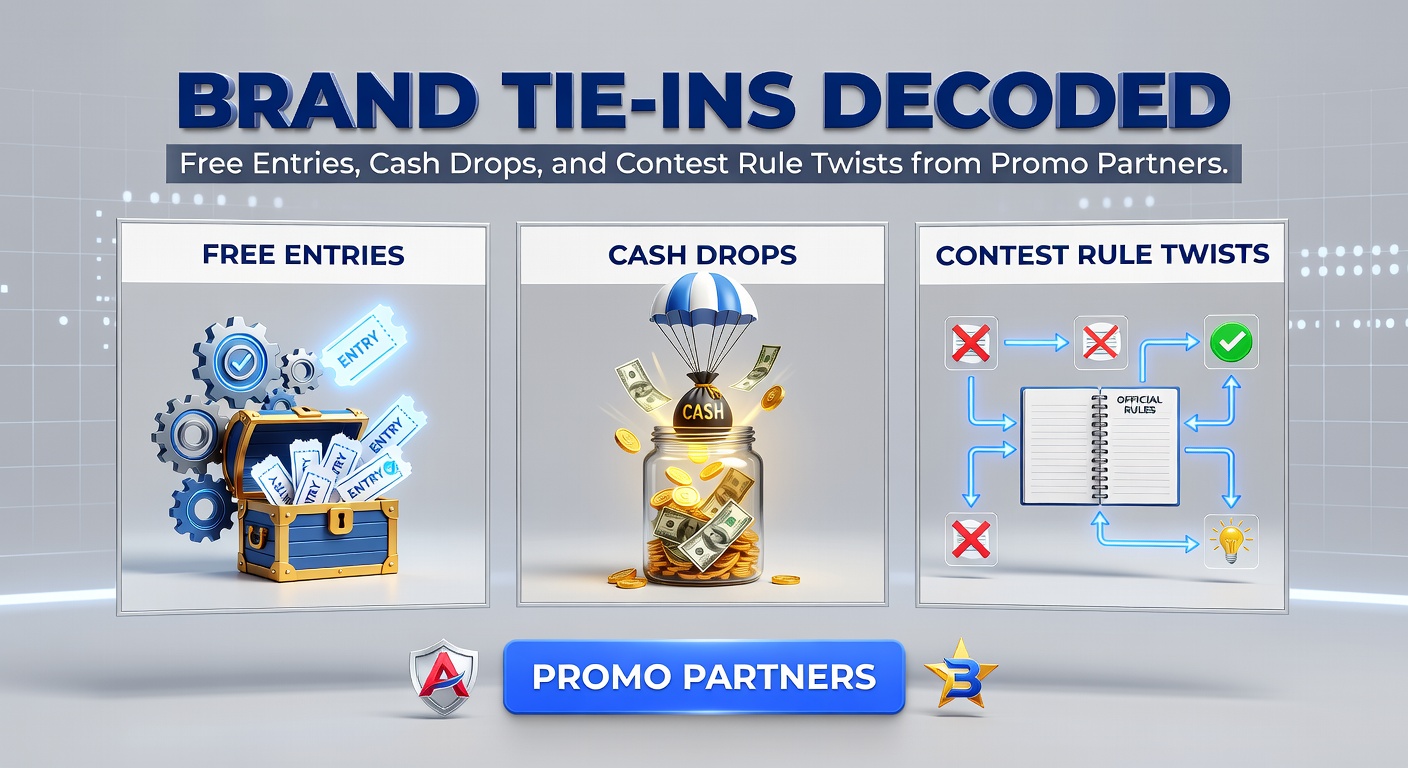
Cash drops inject adrenaline into tie-ins, with promo partners deploying randomized algorithms that ping winners' phones or emails moments after entry—$50 here, $500 there—separate from grand prize draws to sustain momentum. Figures from a 2025 industry survey show these micro-prizes claim 15% of total promo budgets, yet yield 300% higher retention rates since winners chase more. One case saw a beauty brand and energy drink maker drop $100K in total cash across their joint sweep; free entrants qualified equally, rules specifying drops via unique codes redeemable instantly online.
What's interesting lies in the tech backbone—partners use geofencing for location-based drops, notifying store visitors mid-shop, which data indicates spikes impulse buys by 18% without mandating purchases. Although US states like Florida demand bond postings for prizes over $5,000, cash drops skirt this by fragmenting awards, a twist promo firms masterfully navigate.
And for global tie-ins, Australian regulators via the ACCC guidelines (though not linked here directly) influence similar fragmentation; partners adapt, capping per-drop amounts while touting transparency in odds disclosures. Entrants love the "you could win now" vibe, often screenshotting drops to fuel social proof.
Observers point out seasonal spikes—holiday tie-ins double cash drop frequencies—yet promo partners calibrate via A/B testing, ensuring free entry parity keeps it equitable.
Contest Rule Twists: Promo Partners' Creative Compliance
Promo partners excel at rule twists, bending traditional formats without breaking laws; bonus entries for referrals, tiered prizes unlocked by milestones, or "mystery multipliers" that amp free entry odds randomly—all vetted for fairness. Research from trade groups uncovers that 60% of 2024 tie-ins featured at least one twist, like skill-based mini-contests embedded in pure-chance sweeps to skirt gambling tags.
Take a fitness apparel brand tying with a streaming service: rules twisted to award cash drops for workout video uploads (skill element), blending free entries with user-generated buzz; partners tracked 2 million submissions, fulfilling prizes flawlessly. It's not rocket science, but precision matters—twists must detail judging criteria or randomization to satisfy EU consumer directives on transparency.
Yet challenges emerge in cross-border tie-ins; while US promo vets focus on state variances, Canadian partners layer provincial opt-outs, twisting rules for Quebec's no-chance mandates via pure skill variants. Data shows these adaptations lift entry volumes by 35%, as twists like "share-to-enter" leverage networks organically.
Now, looking ahead to April 2026, promo calendars hint at tax-season tie-ins with amplified cash drops—partners already piloting AI-driven rule personalization, where entrant profiles suggest optimal twists like bonus free entries for verified loyalty members. Those who've studied patterns predict a 20% uptick in collaborative budgets, fueled by post-recession thriftiness.
One researcher highlighted a 2025 case where a carmaker and coffee chain twisted rules for "drive-thru drops," free entries via app geo-checks yielding instant $20 fuels; compliance held firm across 50 states, proving partners' prowess.
Navigating the Fine Print in Tie-In Promotions
Entrants diving into brand tie-ins encounter layered rules—affidavits for big wins, tax forms auto-generated by partners, privacy clauses governing data shares between collaborators; yet free entries shield against paywalls, and cash drops often bypass paperwork under $600 thresholds per IRS guidelines. People often find opt-out simplicity via single clicks, although persistent cookies track engagement ethically.
Promo partners innovate with dashboards—real-time entry trackers, odds calculators—demystifying twists; a beverage tie-in last year dashboarded 500K users, cutting support queries by half. But the rubber meets the road in disputes; arbitration clauses prevail, yet public wins build trust.
So as tie-ins evolve, partners' role grows pivotal, blending free access, instant rewards, and clever rules to sustain the promo ecosystem.
Conclusion
Brand tie-ins thrive through free entries that democratize access, cash drops that electrify participation, and rule twists that promo partners craft with regulatory finesse; data underscores their efficacy, from viral spreads to loyalty lifts, positioning them as promo staples. With April 2026 looming large for fiscal-year launches, observers anticipate bolder collaborations, where tech sharpens these elements further. Those entering stay ahead by parsing rules meticulously, capitalizing on every free shot at the pot—proof that smart play turns ties into triumphs.